

- Details
- Written by: Ewa Mąderek
- Category: Popular science article
- Hits: 135
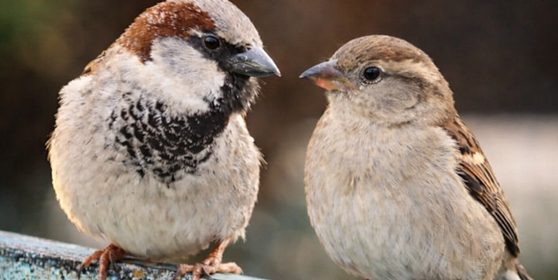
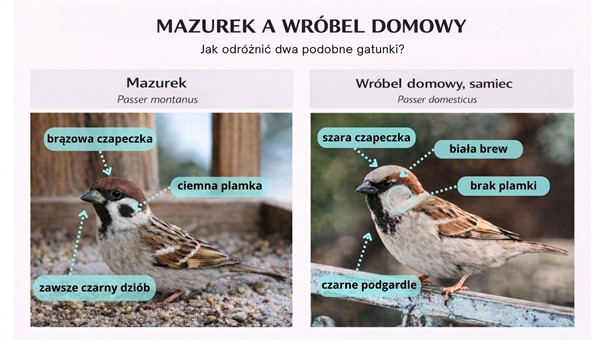
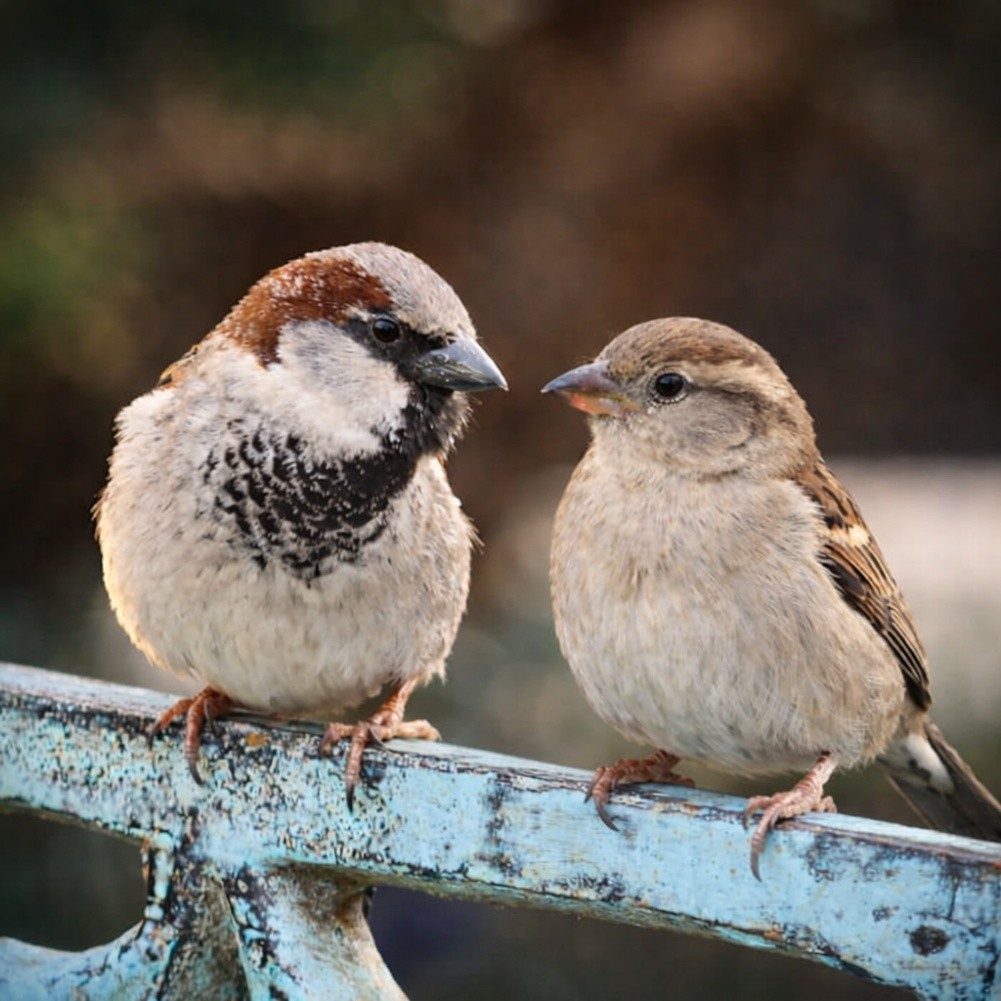
W nr 15/2026 „Kórniczanina” z 4 września 2026 r., na s. 12–14, ukazał się kolejny artykuł z cyklu „Wiadomości z Ogrodów Kórnickich”. Autorką tekstu pt. „Gdzie się podziały wróble?” jest dr Ewa Mąderek z Instytutu Dendrologii PAN.
Artykuł poświęcony jest obserwowanemu w Polsce i innych krajach Europy spadkowi liczebności wróbla domowego (Passer domesticus) – gatunku od wieków silnie związanego z człowiekiem i jego najbliższym otoczeniem. Autorka wyjaśnia, że zjawisko to nie ma jednej przyczyny. Jest wynikiem nakładających się zmian środowiskowych, w tym utraty miejsc lęgowych wskutek modernizacji i uszczelniania budynków, ograniczenia dostępności pokarmu, zwłaszcza owadów niezbędnych w okresie karmienia piskląt, oraz zmian w sposobie urządzania terenów zieleni. Tekst zwraca także uwagę na znaczenie wróbla jako elementu lokalnych ekosystemów oraz na możliwości jego ochrony poprzez zachowanie miejsc lęgowych, gęstych krzewów, żywopłotów i bardziej naturalnych fragmentów zieleni. Ważnym wątkiem są również badania naukowe nad populacjami wróbla, pozwalające analizować ich zmienność genetyczną, reakcję na izolację i presję zmieniającego się środowiska. Artykuł pokazuje, że pytanie „Gdzie się podziały wróble?” wykracza poza los jednego, pozornie pospolitego gatunku. Zmniejszanie się jego liczebności może być sygnałem szerszych przemian zachodzących w środowisku, które współdzielimy z innymi organizmami.
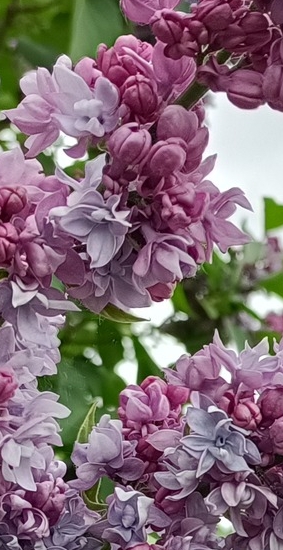
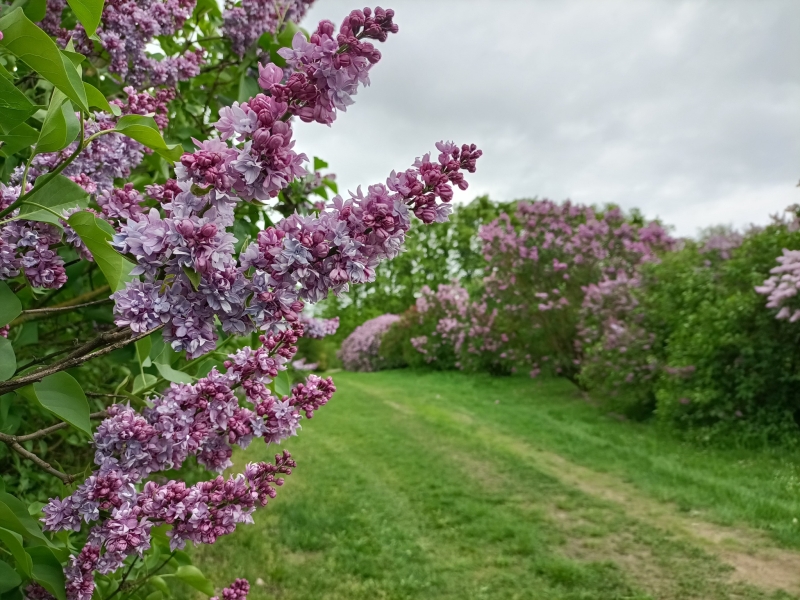
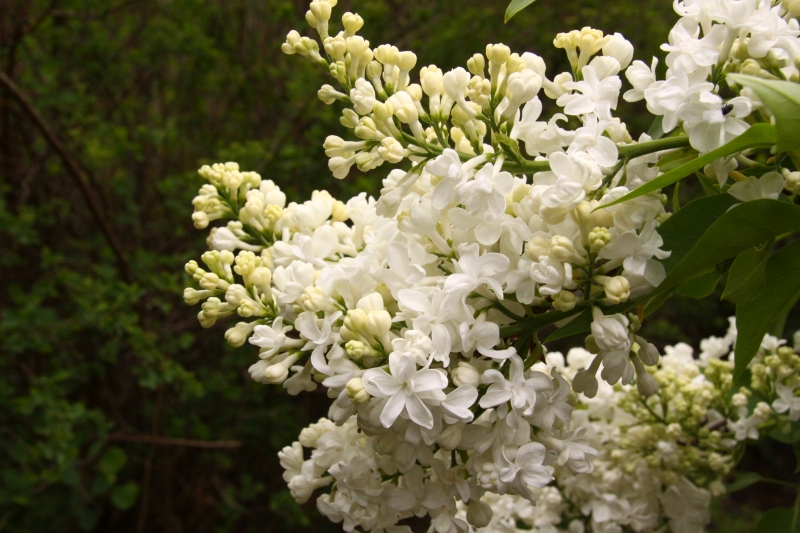
W numerze 1/2026 czasopisma „Chrońmy Przyrodę Ojczystą” ukazał się artykuł popularnonaukowy Elwiry Nawrockiej i Kingi Nowak z Instytutu Dendrologii PAN pt. „Pachnący krzew – bez czy lilak?”. Autorki wyjaśniają, dlaczego lilak pospolity (Syringa vulgaris L.), potocznie nazywany bzem, nie jest bliskim krewnym rodzimego bzu czarnego (Sambucus nigra L.). Przedstawiają bałkańskie pochodzenie lilaka, historię jego wprowadzenia do europejskich ogrodów oraz bogactwo odmian powstałych dzięki pracy hodowców. Pokazują również mniej oczywiste znaczenie tego krzewu: lilak może być reliktem dawnych siedlisk, biologicznym zwiastunem wiosny i wskaźnikiem zmian zachodzących w środowisku. Ważnym wątkiem artykułu są wieloletnie obserwacje fenologiczne prowadzone w Instytucie Dendrologii PAN. Wynika z nich, że lilaki zakwitają dziś znacznie wcześniej niż przed około siedemdziesięciu laty. Rekordowy był rok 2024, kiedy kwitnienie rozpoczęło się już 15 kwietnia. Autorki przybliżają także biologię kwiatów, zapylanie i niezwykłą chemię zapachu lilaków. Opisują również najbogatszą w Polsce kolekcję lilaków w Arboretum Kórnickim, posiadającą status Kolekcji Narodowej. Obejmuje ona 266 pozycji, w tym 242 odmiany uprawne, oraz około tysiąca krzewów, tworząc wyjątkową „żywą bibliotekę” różnorodności biologicznej i historii ogrodnictwa.
- Details
- Written by: Weronika B. Żukowska
- Category: Popular science article
- Hits: 242
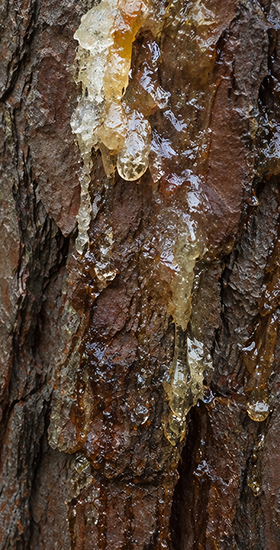
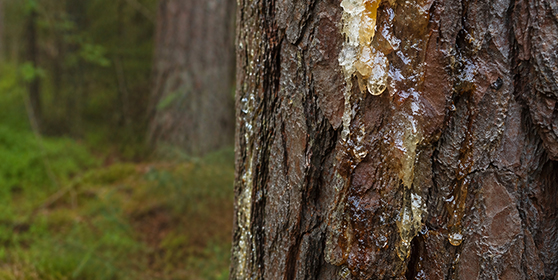
W ramach cyklu „Wiadomości z Ogrodów Kórnickich” w numerze 13/2026 „Kórniczanina” z 17 lipca 2026 r. ukazał się artykuł dr Weroniki B. Żukowskiej z Instytutu Dendrologii PAN pt. „Z lasu do kuchni – co kryją drzewa?”. Tekst można przeczytać na stronach 20–21.
Autorka pokazuje, że drzewa są nie tylko źródłem drewna, lecz także wielu substancji wykorzystywanych w przemyśle spożywczym. Czytelnicy dowiedzą się m.in., czym jest oskoła, z jakich surowców i w jaki sposób otrzymuje się ksylitol, skąd bierze się charakterystyczny smak syropu klonowego oraz jakie zastosowanie mają młode pędy sosny, miód spadziowy, garbniki zawarte w drewnie dębowym i celuloza mikrokrystaliczna. Artykuł przybliża chemiczne bogactwo drzew i pokazuje, jak wpływają one na smak, aromat, strukturę oraz jakość produktów obecnych na naszych stołach.
.jpg)
.jpg)
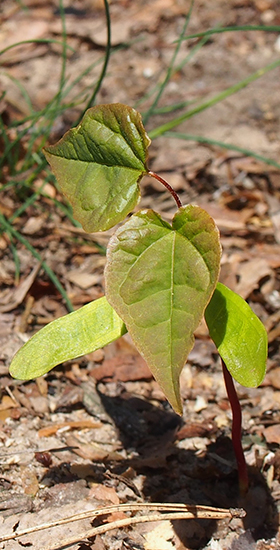
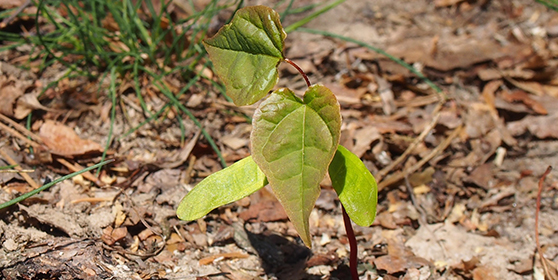
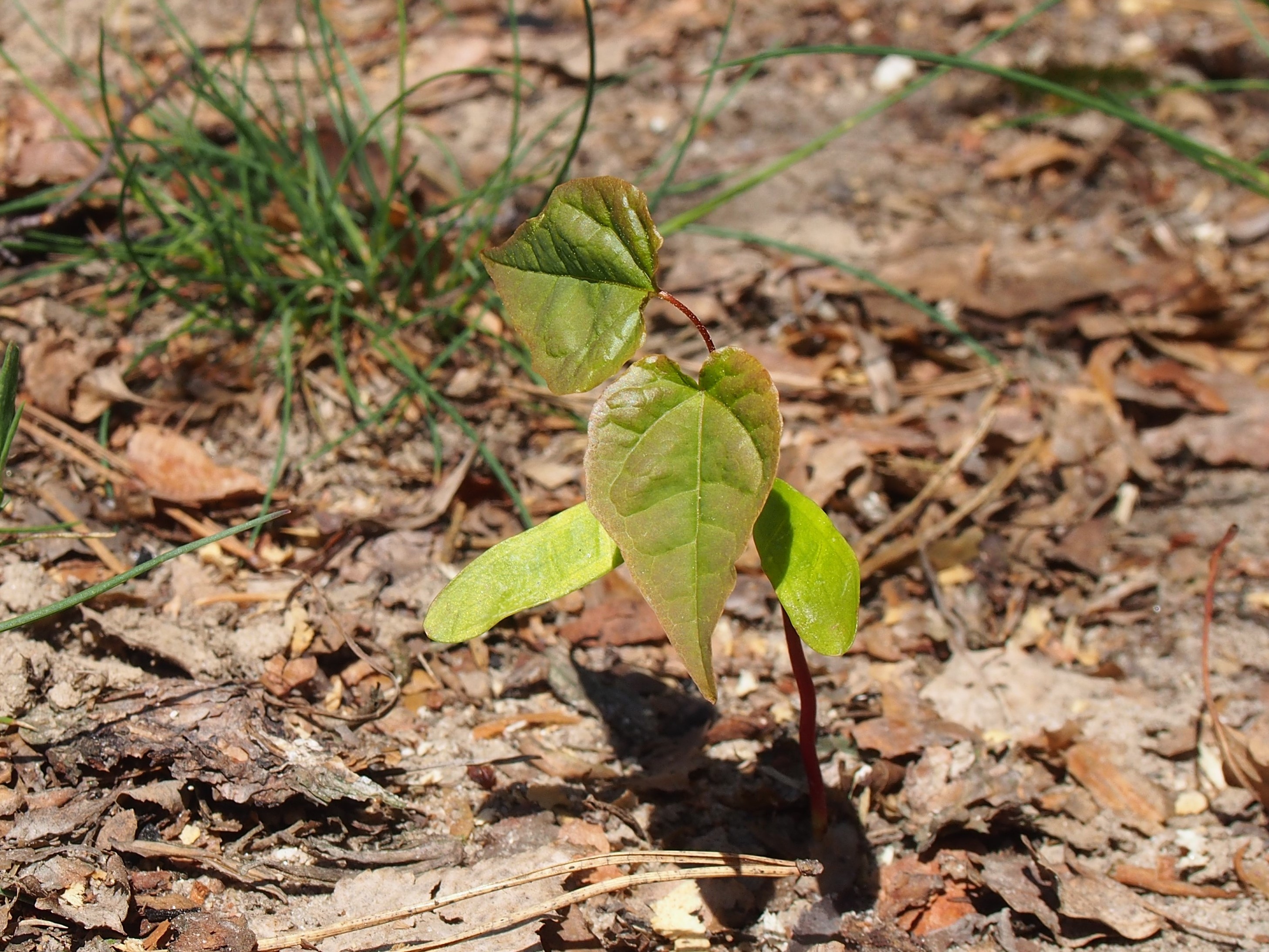
In the magazine “Kórniczanin” — issue no. 12/2026, p. 12 — an article entitled “Maples: An Advantage from the Start” was published as part of the series “News from the Kórnik Gardens”. The author of the text is dr hab. Olena Blinkova from the Institute of Dendrology, Polish Academy of Sciences.
The publication presents the importance of the early developmental stages of Norway maple (Acer platanoides L.) for the natural regeneration of deciduous forests. The author discusses the traits of young individuals that determine their competitiveness: the ability to function under limited light availability, a rapid response to the formation of gaps in the tree canopy, efficient biomass allocation, and an influence on the soil microenvironment. The article emphasizes that the success of Norway maple results not only from its shade tolerance, but also from its high regeneration potential and its impact on the growth conditions of other species.
- Details
- Written by: Andrzej M. Jagodziński
- Category: Popular science article
- Hits: 266
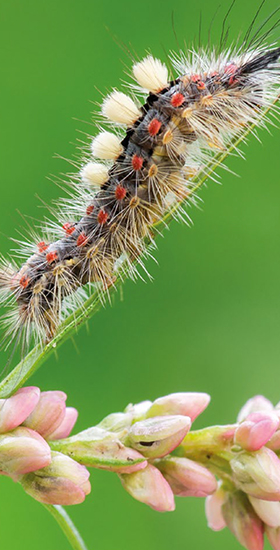
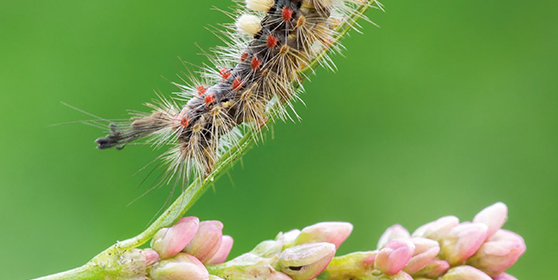
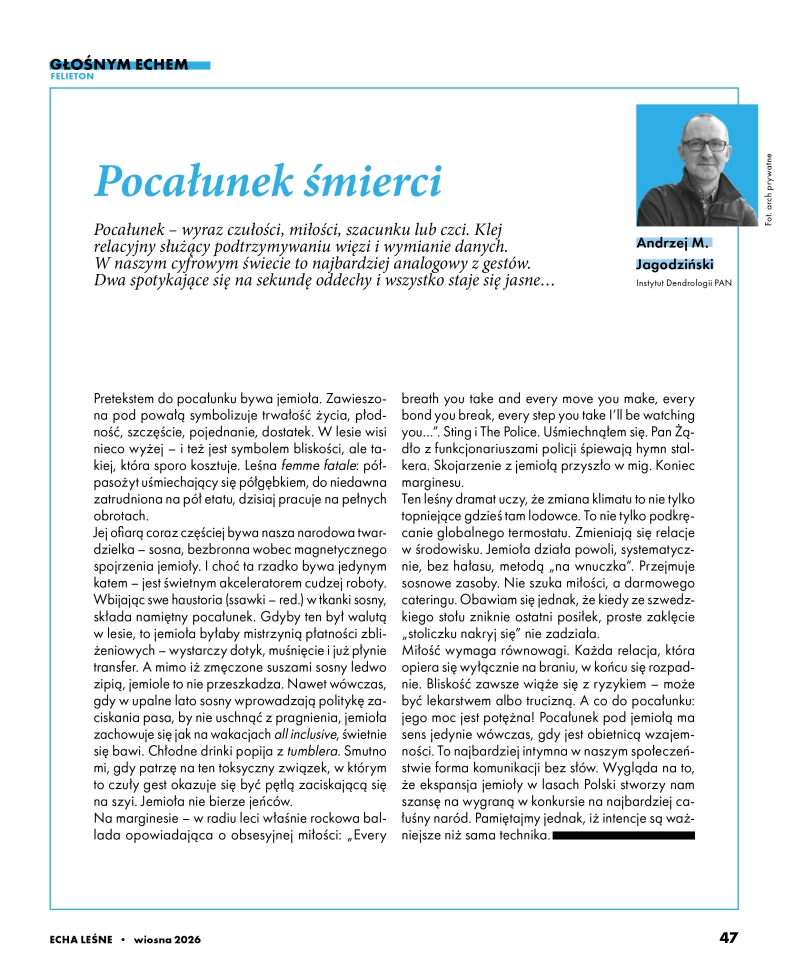
W „Echach Leśnych” (1/2026) ukazał się kolejny felieton prof. Andrzeja M. Jagodzińskiego. Tekst opublikowany został w stałej rubryce „Głośnym Echem” i jest nawiązaniem do artykułu red. Krzysztofa Fronczaka pt. „Królowa ma kłopoty”.
Prof. Jagodziński pisze:
„Pocałunek – wyraz czułości, miłości, szacunku lub czci. Klej relacyjny służący podtrzymywaniu więzi i wymianie danych. W naszym cyfrowym świecie to najbardziej analogowy z gestów. Dwa spotykające się na sekundę oddechy i wszystko staje się jasne…”.
Jak to się ma do królowej, która ma kłopoty?
Aktualny numer oraz numery archiwalne (od 2012 r.) w wersji elektronicznej można znaleźć tutaj: https://www.lasy.gov.pl/pl/informacje/echa-lesne.
Zachęcamy do przeczytania całego numeru. Miłej lektury!