



Zgłoszenie uczestnictwa - UWAGA ZMIANA TERMINU
Udział w Konferencji należy zgłosić do 31 sierpnia 2026 roku wysyłając wypełnione zgłoszenie oraz dokonując opłaty konferencyjnej. W przypadku chęci wygłoszenia referatu lub zaprezentowania posteru należy przesłać streszczenie wystąpienia pocztą e-mailową na adres do 31 sierpnia 2026 roku. W zgłoszeniu należy zadeklarować jedną z form prezentacji (referat, poster). Decyzję o zakwalifikowaniu zgłoszenia do sesji referatowej lub posterowej podejmie Komitet Naukowy, a informacja o decyzji przesłana zostanie drogą e-mailową na adres autora do korespondencji (do 23 września 2026 roku).
Formularz zgłoszeniowy: "Drzewa i lasy w zmieniającym się środowisku"

ZAPROSZENI PRELEGENCI
Podczas 3. Konferencji naukowej „Drzewa i lasy w zmieniającym się środowisku” wygłoszone zostaną wykłady zaproszonych gości.
Wykłady będą prowadzone w języku angielskim, jednakże z możliwością wysłuchania tłumaczenia na język polski.
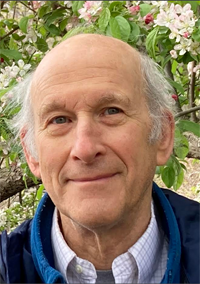
Prof. Richard B. Primack
Boston University, USA
Author of Conservation Biology Textbooks
Biological Conservation, Former Editor-in-Chief
The growing and vital role of botanical gardens in climate change and functional ecology research
Botanical gardens and arboretums make unique contributions to climate change research, functional ecology, conservation, and public engagement. They host unique resources, including diverse collections of plant species growing in natural conditions, historical records, and expert staff, and attract large numbers of visitors and volunteers. Networks of botanical gardens spanning biomes and continents can expand the value of these resources. Over recent decades, research projects at botanical gardens have advanced our understanding of climate change impacts on plant phenology, physiology, anatomy, and conservation. For example, researchers have utilized botanical garden networks to assess anatomical and functional traits associated with phenological responses to climate change. New methods have enhanced the pace and impact of this research, including phylogenetic and comparative methods, and online databases of herbarium specimens and photographs that allow studies to expand geographically, temporally, and taxonomically in scope. Botanical gardens have grown their community and citizen science programs, informing the public about climate change and monitoring plants more intensively than is possible with garden staff alone. Despite these advances, botanical gardens are still underutilized in climate change and functional ecology research. To address this, we review recent progress and describe promising future directions for research and public engagement at botanical gardens.
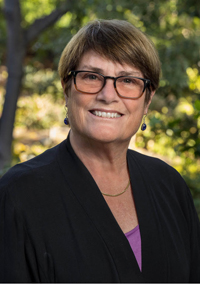
Prof. Victoria L. Sork
Garden Director, UCLA Mathias Botanical Garden
Distinguished Professor, Department of Ecology and Evolutionary Biology
Distinguished Professor, Institute of the Environment and Sustainability
University of California, Los Angeles, USA
Maladaptation to changing environments in California oaks
Oaks are a remarkably resilient genus that have dominated ecosystems across the Northern Hemisphere over the last 50 milion years. Yet today, California oak populations are facing mounting threats from land-use change, invasive pests and pathogens, fire, and increasing drought. In this talk, I present evidence of emerging maladaptation based on growth patterns of trees sourced across the species’ climatic range and evaluated in two common garden experiments. Building on these results, I integrate common garden and landscape genomic analyses to project how current populations may become increasingly mismatched to future climates. I conclude by demonstrating how strategic seed transfer—using genotypes pre-adapted to anticipated conditions—can enhance the resilience and long-term health of oak ecosystems under climate change.

Prof. Rodolfo Picchio
Tuscia University, Department of Agricultural and Forest Sciences (DAFNE), Viterbo, Italy
Trends and perspective in aerial extraction systems, a possible pathways towards reduced impact logging
The cable yarder systems, though often overlooked, is at the core of the logging evolution. The implementation of Forestry 4.0 technologies is underway, and recent developments are increasingly aligned with Forestry 5.0 principles, aiming to enhance the sustainability of forest operations. Initially, the introduction of cable yarding systems has transformed timber harvesting operations on steep slopes, but nowadays these systems are often associated with flat areas too. Subsequent evolutions have led to substantial improvements in the versatility of use, safety, productivity, and environmental performance. In detail, these new technologies make it possible to maintain economic viability in smaller operations, expected to become the norm in the future, by reducing machine costs and enabling faster relocation, all while ensuring increasingly strong environmental protection. A further approach for proper sustainable forest operations.
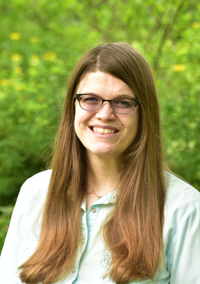
Andrea Brennan, PhD
ArbNet Manager, The Morton Arboretum, Lisle, IL, USA
Harnessing ArbNet, the global network of arboreta, for collaborative research and conservation
ArbNet, the award-winning, global community of arboreta and tree-focused professionals, is instrumental in helping establish, grow, and network over 950 accredited arboreta across 41 countries. Through ArbNet, arboreta, tree professionals, and scientists connect and collaborate on high-impact, global research, in topics such as climate change, plant conservation, and ecology, to name a few. In support of this, ArbNet offers the only international arboretum accreditation program, a vast database of arboretum-related data, a small grants program, and a new initiative to better connect arboreta with research and conservation partners across the globe.
WAŻNE TERMINY - UWAGA ZMIANA TERMINU
do 31 sierpnia 2026 r. – zgłoszenie udziału w Konferencji i wniesienie opłaty konferencyjnej
do 31 sierpnia 2026 r. – przesłanie streszczenia referatu lub plakatu
do 23 września 2026 r. – przesłanie decyzji Komitetu Naukowego o zakwalifikowaniu zgłoszenia do sesji referatowej lub plakatowej
do 5 października 2026 r. – wysłanie uczestnikom pełnego programu Konferencji drogą e-mailową
STRESZCZENIA WYSTĄPIEŃ
Zgłoszenia wystąpień będą kwalifikowane do udziału w sesjach referatowych lub plakatowych Konferencji przez Komitet Naukowy na podstawie streszczeń.
Streszczenia wystąpień prosimy wysyłać na adres e-mailowy:
WZÓR STRESZCZENIA - pobierz
SEKRETARIAT KONFERENCJI
mgr inż. Michalina Piegat
dr Weronika B. Żukowska
dr inż. Paweł Horodecki
tel: 61 817 00 33
E-mail: