


- Details
- Written by: Institute of Dendrology PAS
- Category: Other Projects
- Hits: 990
Project title: “Polish Node of the Global Biodiversity Information Facility”
GBIF – Global Biodiversity Data Infrastructure
Global Biodiversity Information Facility (GBIF) is an international network and data infrastructure that has been providing open and free access to information about all forms of life on Earth for over two decades. Funded by governments around the world, the initiative responds to the growing demand for reliable data in the face of global challenges such as biodiversity loss and climate change.
Data made available through GBIF support both scientific research and decision-making processes at local, national, and global levels.
Structure and Functioning of GBIF
The activities of Global Biodiversity Information Facility (GBIF) are coordinated by its Secretariat based in Copenhagen. The network is composed of member countries and partner organizations that collaborate within a shared infrastructure. Each member operates a national or institutional node responsible for coordinating activities and enabling data publication at the local level.
Membership in GBIF is voluntary and formalized through the signing of an agreement that defines the principles of cooperation, including a commitment to supporting open access to biodiversity data. Member countries and participating institutions contribute to achieving the goals of the Convention on Biological Diversity (CBD), among others by sharing data and developing monitoring systems.
The GBIF community continues to grow, bringing together experts and institutions dedicated to advancing open data and international collaboration.
Poland in GBIF
Poland is a full member of the Global Biodiversity Information Facility (GBIF) and holds voting rights in decisions shaping the future direction of the initiative. The national GBIF node is hosted by Uniwersytet Warszawski (University of Warsaw), where a team of specialists coordinates activities and supports institutions in publishing biodiversity data.
Data Sources and Data Quality
The establishment of the Global Biodiversity Information Facility (GBIF) was based on recommendations from the Biodiversity Informatics Subgroup of the Organisation for Economic Co-operation and Development. These recommendations emphasized the need for a global mechanism to ensure broad access to biodiversity data, highlighting the potential scientific and societal benefits of such an initiative.
A key aspect of GBIF’s operation is its strong focus on data quality. Only datasets provided directly by recognized scientific institutions and competent organizations are published. Data publishers primarily include universities, research institutes, government agencies, and scientific journals. Individual researchers typically publish their data through these institutions or via national GBIF nodes.
Data Standardization and Integration
Global Biodiversity Information Facility (GBIF) provides tools, standards, and best practices that enable institutions worldwide to efficiently share biodiversity data. These data include information on species occurrences across time and space, originating from a wide range of sources—from historical museum collections to modern genetic data and field observations.
Citizen science initiatives also play an important role. Platforms such as iNaturalist allow users to record and share biodiversity observations using mobile devices, significantly expanding the volume and geographic coverage of available data.
Data integration within GBIF relies on shared standards, particularly Darwin Core, which underpins the structure of most datasets in the system. This standardization makes it possible to combine hundreds of millions of records from diverse sources into a single, coherent data resource.
Data Access and Use
All data shared through Global Biodiversity Information Facility (GBIF) are published under one of the Creative Commons licenses, ensuring open access and broad reusability. These data can be used in scientific research, environmental monitoring, natural resource management, conservation planning, and many other applications requiring biodiversity information.
Each dataset is assigned a unique DOI (Digital Object Identifier), which enables persistent citation and reliable access to the original data source.
Darwin Core Standards
Darwin Core is an international standard for describing biodiversity data. It enables consistent recording of information about species and their occurrences, allowing datasets from different sources to be easily integrated, analyzed, and shared on a global scale.
Why is Darwin Core important?
In initiatives such as Global Biodiversity Information Facility (GBIF), data consistency is essential. Darwin Core provides a common “language” that enables institutions worldwide to publish data in a comparable and interoperable way.
This makes it possible to:
- integrate data from different databases and countries,
- conduct large-scale analyses (e.g. changes in species distributions),
- use data effectively in scientific research and biodiversity conservation.
What kind of data does it cover?
Darwin Core allows for the standardized description of, among others:
- scientific names of organisms,
- geographic location (e.g. coordinates),
- date of observation or specimen collection,
- data source (e.g. museum collection, field observation),
- information about the observer or institution.
The standard is flexible and can be adapted to different types of data—from historical museum specimens to modern field observations and molecular data.
Publishing data using Darwin Core
Datasets formatted according to Darwin Core are typically published through GBIF tools such as IPT (Integrated Publishing Toolkit). This ensures that:
- data are automatically validated,
- datasets receive a persistent identifier (DOI),
- data become accessible to users worldwide.
The use of Darwin Core is currently one of the fundamental requirements for publishing data in GBIF and ensures both high data quality and usability.
Legal Framework
Publishing data in Global Biodiversity Information Facility (GBIF) is based on legal regulations and international standards governing data sharing, reuse, and information protection.
European Union regulations
NSPIRE Directive:https://eur-lex.europa.eu/legal-content/PL/TXT/?uri=CELEX:32007L0002
Open Data Directive:https://eur-lex.europa.eu/legal-content/PL/TXT/?uri=CELEX:32019L1024
General Data Protection Regulation (GDPR): https://eur-lex.europa.eu/legal-content/PL/TXT/?uri=CELEX:32016R0679
National regulations (Poland)
Act on Open Data and Re-use of Public Sector Information:https://isap.sejm.gov.pl/isap.nsf/DocDetails.xsp?id=WDU20210001641
Copyright Law:: https://isap.sejm.gov.pl/isap.nsf/DocDetails.xsp?id=WDU19940240083
International regulations:
Convention on Biological Diversity (CBD):https://www.cbd.int/convention/text/
Nagoya Protocol: https://www.cbd.int/abs/doc/protocol/nagoya-protocol-en.pdf
GBIF standards and guidelines:
https://www.gbif.org/publishing-data
https://www.gbif.org/data-quality-requirements
Licensing:
Polish GBIF Node – About the Project
What is the Polish GBIF Node?
The Polish Node of the Global Biodiversity Information Facility (GBIF) is the national component of the global biodiversity data infrastructure. Its main objective is to support institutions in Poland in publishing, sharing, and effectively using biodiversity data.
The activities of the Polish GBIF Node are funded under the project “Polish Node of the Global Biodiversity Information Facility”, implemented on the basis of Agreement No. 2023/WK/09 within the programme “Support for the participation of Polish research teams in international research infrastructure projects”. The project is carried out in accordance with the provisions of the agreement and its subsequent amendments.
The agreement was concluded with the Ministry of Education and Science, whose responsibilities are currently carried out by the Ministry of Science and Higher Education. This funding supports the development of the national biodiversity data infrastructure and enables Poland’s active participation in the global GBIF network.
Project leader
The Polish GBIF Node is led by Uniwersytet Warszawski (University of Warsaw) (Project Investigator: Dr Piotr Tykarski), which is responsible for coordinating activities at the national level.
The node team supports institutions in:
- preparing data for publication,
- applying standards (e.g. Darwin Core),
- using GBIF tools,
- building capacity in data management.
Main objectives:
- zwiększenie dostępności danych o bioróżnorodności z Polski,
- wspieranie otwartego dostępu do danych naukowych,
- rozwój współpracy między instytucjami,
- wspieranie badań naukowych i działań na rzecz ochrony przyrody,
- dostarczanie danych do raportowania w ramach międzynarodowych zobowiązań, takich jak Convention on Biological Diversity.
Project partners
The project involves a wide range of scientific institutions and universities, including:
- W. Szafer Institute of Botany, Polish Academy of Sciences
- Institute of Dendrology, Polish Academy of Sciences
- Institute of Oceanology, Polish Academy of Sciences
- Institute of Systematics and Evolution of Animals, Polish Academy of Sciences
- Upper Silesian Museum in Bytom
- Adam Mickiewicz University in Poznań
- University of Gdańsk
- Jagiellonian University
- University of Łódź
- Maria Curie-Skłodowska University
- University of Agriculture in Kraków
- University of Silesia in Katowice
- University of Wrocław
These institutions act as data publishers and share their datasets through the GBIF infrastructure.
Why is it important?
Through the activities of the Polish GBIF Node, data on Poland’s biodiversity become part of a global knowledge base. This enables:
- better understanding and monitoring of biodiversity,
- evidence-based decision-making,
- Poland’s participation in international scientific and environmental initiatives.
Institute of Dendrology, Polish Academy of Sciences in GBIF
The Institute of Dendrology, Polish Academy of Sciences is one of the leading research institutions in Poland specializing in the study of trees and shrubs, including their biology, ecology, and genetic diversity. The Institute actively contributes to the sharing of biodiversity data through the Global Biodiversity Information Facility (GBIF), supporting the development of open scientific data resources.
Role of the Institute in GBIF
The Institute of Dendrology PAS acts as a data publisher, which means that it:
- provides validated scientific data on species occurrences,
- publishes datasets in accordance with international standards (e.g. Darwin Core),
- ensures high quality and reliability of shared information.
As a result, the Institute’s data are globally accessible and can be used in scientific research, environmental analyses, and biodiversity conservation activities.
The coordinator of the Institute’s activities within the Polish Node of the Global Biodiversity Information Facility is PhD Habill. Dominik Tomaszewski, Professor ID PAS.
The role of Data Manager and the main contact point for researchers wishing to publish data in GBIF is held by PhD Karolina Sobierajska, who supports the preparation and publication of datasets in accordance with applicable standards.
GBIF profile
Datasets published by the Institute can be accessed directly via the GBIF portal:
https://www.gbif.org/publisher/f7259790-9300-11da-8596-b8a03c50a862
The publisher profile provides information about the institution and a full list of all published datasets.
The Institute publishes, among others, data on:
- occurrences of tree and shrub species,
- dendrological collections,
- field observations and scientific research data.
Examples of datasets available in GBIF:
- Institute of Dendrology PAS Woody Plant Occurrence Dataset (Poland)
https://www.gbif.org/dataset/f7c496b0-9300-11da-8596-b8a03c50a862 - Juniperus occurrences from research collections of the Institute of Dendrology, Polish Academy of Sciences
https://www.gbif.org/dataset/ef062cb4-8ff4-46c4-b926-f5e4063973ab - Acer L. specimens held in the KOR Herbarium of the Institute of Dendrology, Polish Academy of Sciences
https://www.gbif.org/dataset/7e5516b0-9bfc-45a9-9d94-5b66212a3baa
Each dataset includes:
- detailed metadata,
- information on sources and methodology,
- a unique DOI enabling proper citation.
By publishing data through GBIF, the Institute:
- supports global biodiversity research,
- increases the visibility of Polish scientific data,
- enables their use in environmental and climate change analyses.
Open data publishing contributes to scientific progress and improves our understanding of processes occurring in the natural environment.
Data Manager – Institute of Dendrology PAS
If you are a researcher at the Instytut Dendrologii Polskiej Akademii Nauk and would like to publish biodiversity data from your research in the Global Biodiversity Information Facility (GBIF), please contact the Data Manager:
Contact person:
Karolina Sobierajska
e-mail:
ext. 136
mobile: +48 575 770 669
Other Data Managers at the Institute: Dominik Tomaszewski, Magdalena Terlecka
Support includes assistance with data preparation for publication, alignment with standards (e.g. Darwin Core), and guidance through the GBIF publishing process.
- Details
- Written by: Instytut Dendrologii PAN
- Category: Other Projects
- Hits: 2602
Project title: “Internationalisation of ID PAS through development support in the sphere of service provision to foreign doctoral students and scientists” (Acronym: 4INTEgrateIDPAS)
Objective: The objective of the project is to improve institutional capabilities of ID PAS through the performance of training activities addressed to employees, scholarship holders and doctoral students at ID PAS, the development the English version of the Institute's website, and the preparation of English versions of the Entity’s internal documents.
Measures planned under the Project:
- MEASURE I - English language course for administration staff [NOTICE: Registration for the English Summer School is now open. Details are available below under the "Registration for participation in the English Summer School"]
- MEASURE II - English language course for scientists NOTICE: Registration for the English Summer School is now open. Details are available below under the "Registration for participation in the English Summer School"]
- MEASURE III - English language course for technical and engineering staff NOTICE: Registration for the English Summer School is now open. Details are available below under the "Registration for participation in the English Summer School"]
- MEASURE IV - Adaptation of documents and procedures in place at ID PAS to services provided to foreigners (translation into English)
- MEASURE V - Adaptation of the website of the Institute of Dendrology, Polish Academy of Sciences to the needs of foreigners
- MEASURE VI - Training courses in service provision to foreigners,
- MEASURE VII - Training in international team management, preparation of documents/procedures in a foreign language [NOTE: Registration for the training on 19 March 2026 has started / The training will be conducted in Polish: https://docs.google.com/forms/d/e/1FAIpQLSdyDaNM1nVF5j25uWD0HUXnLWz_MKGTh0IKaXElFugrB4nwRQ/viewform?usp=sharing&ouid=102836284592334505816]
Welcome to Kórnik [English file for download]
Registration for the English Summer School under Actions I, II and III
Rules and Regulations The source document is available here [PL version]
Registration link:
29.06 - 10.07. 2026 r.: https://docs.google.com/forms/d/e/1FAIpQLSdsffh3ZoeBwwu-QedBbwNzWpfDiDrwQV93hL9_xp2Tpz_ojw/viewform?usp=dialog
03.08 - 14.08.2026 r.: https://docs.google.com/forms/d/e/1FAIpQLSe7vOiAkrfil_w3EL6BBjV53q1LNy1apH5_hwKIdX2WBK5mZw/viewform?usp=dialog
Key information:
English language course for administrative staff - The target group includes employees of the Scientific Information Department, Secretariat, Library, Archive, Administrative Department staff responsible for contact and services for foreigners, staff of the Finance and Accounting Department, and the employee responsible for occupational health and safety (OHS).
-
The course will be conducted in 1 group of up to 10 participants - 10 working days, 8:00–11:00
English language course for researchers - The target group includes employees conducting research activities as well as PhD students.
-
The course will be conducted in 1 group of up to 10 participants - 10 working days, 11:10–14.10
English language course for technical staff - The target group includes technical staff – defined within the project as individuals involved in the Institute’s research activities (regardless of job title) – as well as broadly understood administrative staff indirectly involved in supporting foreigners, e.g. cleaning service staff, maintenance staff, laborers, and reception desk personnel.
-
The course will be conducted in 1 group of up to 10 participants - 10 working days, 8:00–11:00
Participant’s Declaration The source document is available here [PL version]
Additional Participant Consent for Data Processing The source document is available here [PL version]
Registration for the English language course under Actions I, II and III
Rules and Regulations The source document is available here [PL version] / [Plik do pobrania /Polish-English file for download]
Registration link:
https://docs.google.com/forms/d/e/1FAIpQLSfBI-RHMuwwf1RVYFE-T4YcywNMRqdHniY8K4zaept9H91doA/viewform?usp=header
Key information:
English language course for administrative staff - The target group includes employees of the Scientific Information Department, Secretariat, Library, Archive, Administrative Department staff responsible for contact and services for foreigners, staff of the Finance and Accounting Department, and the employee responsible for occupational health and safety (OHS).
-
The course will be conducted in 3 groups of up to 7 participants each - 2 lessons per week over 10 months (a total of 240 lessons for 3 groups).
English language course for researchers - The target group includes employees conducting research activities as well as PhD students.
-
The course will be conducted in 5 groups of up to 5 participants each - 2 lessons per week over 10 months (a total of 400 lessons for 5 groups).
-
Additionally, 240 individual lessons will be provided with a native speaker.
English language course for technical staff - The target group includes technical staff – defined within the project as individuals involved in the Institute’s research activities (regardless of job title) – as well as broadly understood administrative staff indirectly involved in supporting foreigners, e.g. cleaning service staff, maintenance staff, laborers, and reception desk personnel.
-
The course will be conducted in 5 groups of up to 5 participants each - 2 lessons per week over 10 months (a total of 400 lessons for 5 groups).
Participant’s Declaration The source document is available here [PL version] [Plik do pobrania /Polish-English file for download]
Additional Participant Consent for Data Processing The source document is available here [PL version] [Plik do pobrania /Polish-English file for download]
Contact: Department of Scientific Information, Karolina Sobierajska, PhD, e-mail
Rules & Regulations for Recruitment and Participation in Training Tasks Performed as part of the Project [file]
- Details
- Written by: Wiesław Płócieniak
- Category: Other Projects
- Hits: 1649
Project title: “A climate for biodiversity”
Type of project: Social responsibility of science – popularisation of science and promotion of sport
Name of programme: Social Responsibility of Science / Perfect Science
Project carried out in the years 2022-2023 as part of the “Social responsibility of science” programme established by the Ministry of Education and Science (SONP/SP/513422/2021) with the support of the Kórnik Municipality and the Zakłady Kórnickie Foundation
- Trailer: https://www.youtube.com/watch?v=YDIuptMKLWc
- Workshops Trailer: https://www.youtube.com/watch?v=JGXUa8Gb4PM
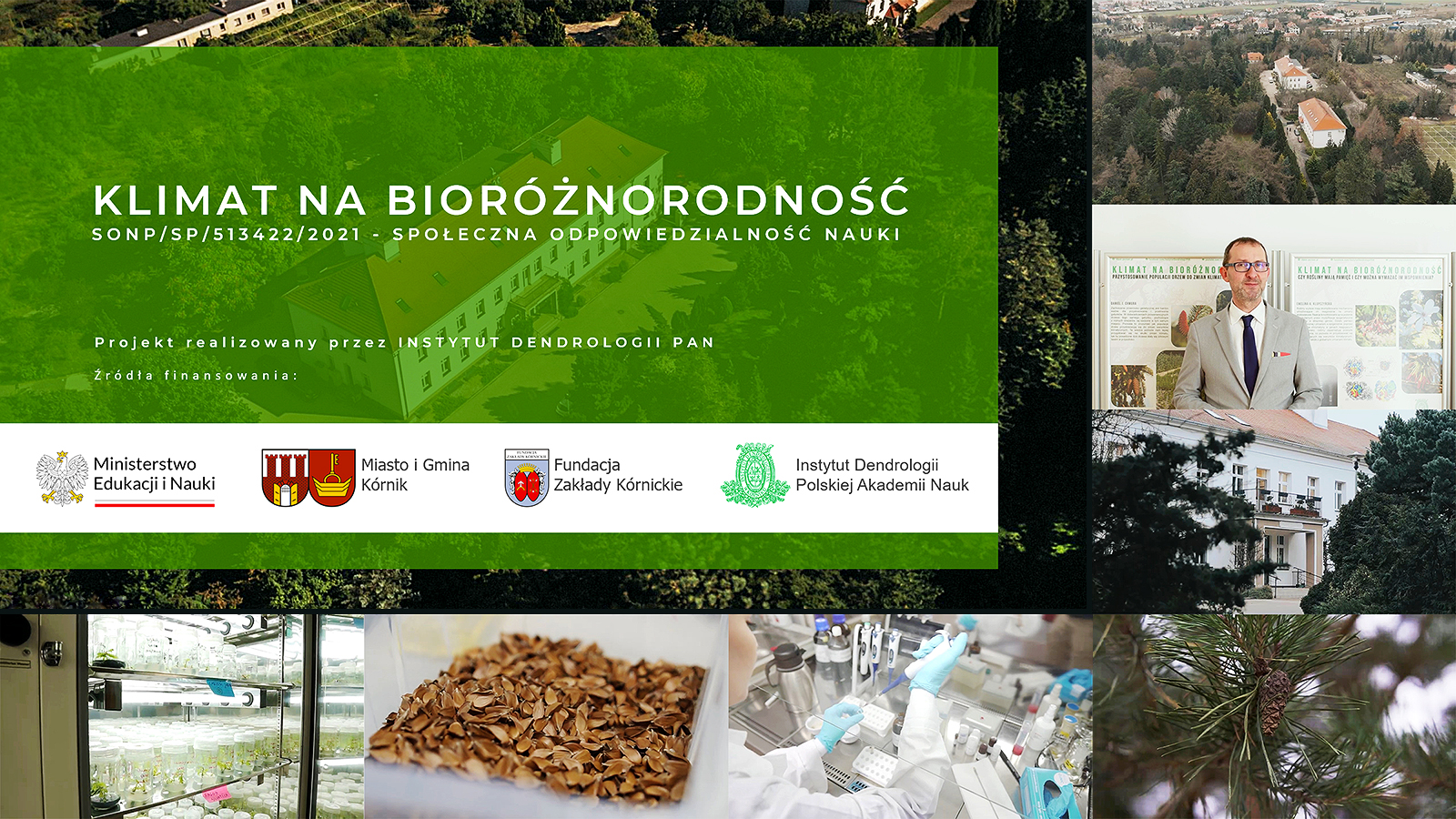
Goal: The goal of the project was to raise public awareness of the causes and effects of global climate change. It continues to be a controversial subject, with contradictory information coming from the media, and opinions being divided on whether climate protection efforts are profitable. The data collected by the Institute of Dendrology, Polish Academy of Sciences, not only reflects what we currently know about climate, but also highlights an urgent need for action. Our experts have presented the latest research findings and explained
what contributes to climate change and what are its consequences.
The project’s goal was not only to popularise science and research accomplishments of the Institute of Dendrology, Polish Academy of Sciences, but also to promote the work of our scientists and disseminate their research findings. In addition, the project elevated the Institute’s recognisability in Poland and internationally.
Project implementation: The project intended to reach a wide audience regionally (temporary exhibitions at the Institute’s Arboretum, attracting over 100,000 visitors annually), nationally (posting videos on the website and social media, promotional materials with Polish subtitles) and internationally (promotional materials featuring English subtitles published on the Institute’s website and social media).
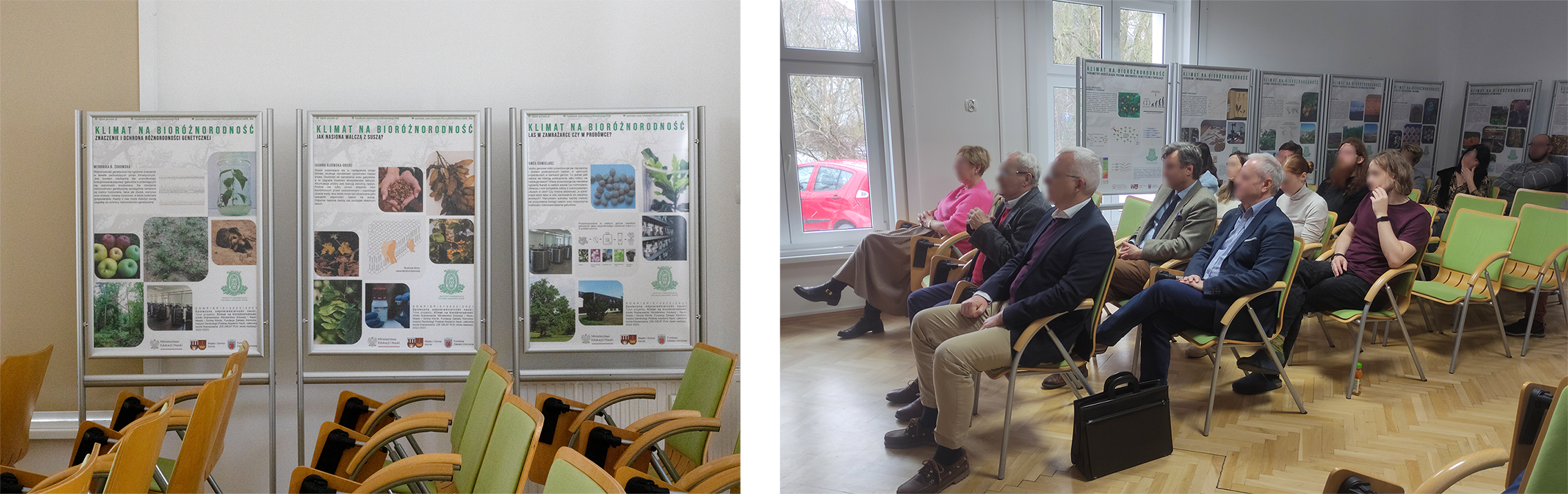
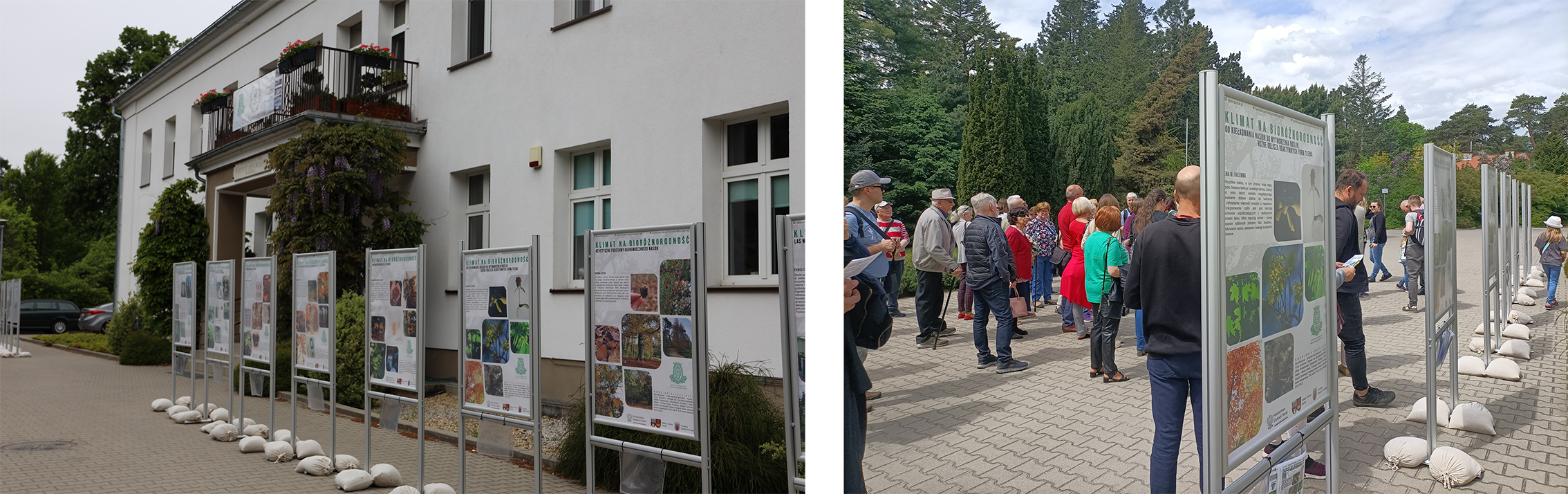
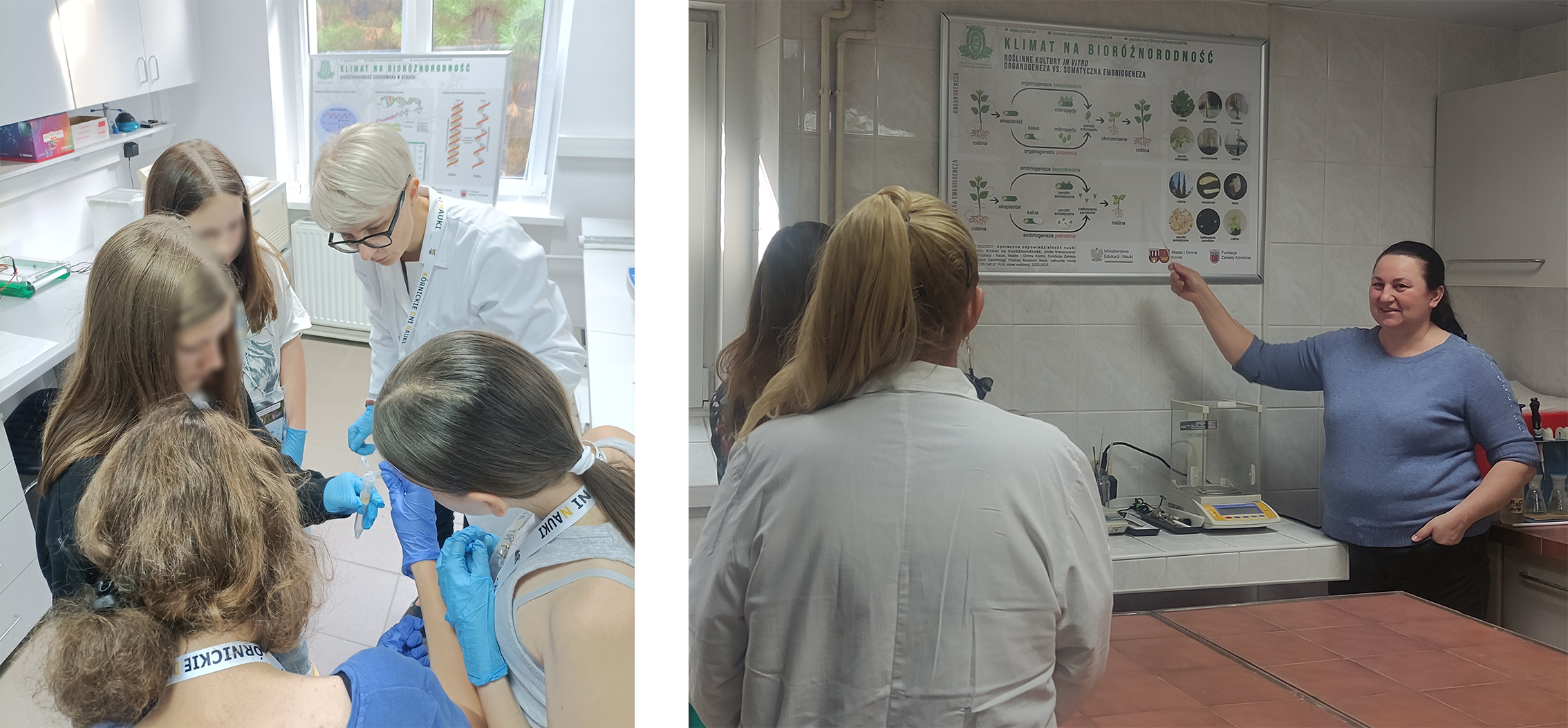
The project measures were divided into two phases. A total of 42 lectures and 18 workshops were organised and recorded to be published as audiovisual materials on the website and social media (Facebook, YouTube) of the Institute of Dendrology, Polish Academy of Sciences, as well as in the form of periodic, internal and external exhibitions of posters and educational boards. The project was mentioned, among others, in local press at a scientific conference organised by the Institute and during guest lectures delivered by our scientists in other institutions.
- YouTube – A climate for biodiversity https://www.youtube.com/playlist?list=PLKNenHEi1zJpXbzRvblemfDKu1Cx5hBgs
LECTURES:
- Climate and the diversity and occurrence of fungi. (Original title: Klimat a różnorodność i występowanie grzybów). Dr. Habil. Marcin Pietras, Prof. ID PAS. (Associate Professor) [watch here: YouTube]
- How will climate change affect mushroom picking? (Original title: Jak zmiany klimatu wpłyną na koszyk grzybiarza?). Dr. Marta B. Kujawska. [watch here: YouTube]
- Hypogeous fungi in a changing climate. (Original title: Grzyby podziemne a zmieniający się klimat). Dr. Robin Wilgan. [watch here: YouTube]
- Where the forest begins. Ectomycorrhiza in forest nurseries. (Original title: Tam, gdzie zaczyna się las. O mykoryzie w szkółkach leśnych). Prof. Maria Rudawska. [watch here: YouTube]
- A forest without fungi. Is it possible? (Original title: Las bez grzybów. Czy jest to możliwe?). Dr. Habil. Tomasz Leski, Prof. ID PAS (Associate Professor). [watch here: YouTube]
- Living on an oak tree – a local biodiversity hotspot. (Original title: Życie na dębie – lokalny hotspot bioróżnorodności). Prof. Marian J. Giertych. [watch here: YouTube]
- Extramatrical mycelium of mycorrhizal fungi in the soil. (Original title: Grzybnia ekstramatrykalna grzybów mykoryzowych w glebie). Dr. Habil. Leszek Karliński, Prof. ID PAS (Associate Professor). [watch here: YouTube]
- Could climate change affect the interactions between tree roots and fungi? (Original title: Grzybnia ekstramatrykalna grzybów mykoryzowych w glebie). Dr. Habil. Joanna Mucha, Prof. ID PAS (Associate Professor). [watch here: YouTube]
- Differet climate – different roots. (Original title: Różny klimat – różne korzenie). Dr. Paulina Kościelniak. [watch here: YouTube]
- The forest is not only trees. Understory plants. (Original title: Las to nie tylko drzewa. Rośliny runa leśnego). Dr. Katarzyna Rawlik. [watch here: YouTube]
- Forest in a freezer or in a test tube? (Original title: Las w zamrażarce czy w probówce?). Prof. Paweł Chmielarz. [watch here: YouTube]
- Climate and tree seed germination. (Original title: Klimat a kiełkowanie nasion drzew). – Prof. Tomasz A. Pawłowski. [watch here: YouTube]
- Biodiversity in a shell. (Original title: Bioróżnorodność w łupince). Dr. Mikołaj K. Wawrzyniak. [watch here: YouTube]
- Will stressed seeds offer us better future? (Original title: Czy zestresowane nasiona zapewnią nam lepszą przyszłość?). Dr. Habil. Ewelina Ratajczak, Prof. ID PAS (Associate Professor). [watch here: YouTube]
- How do seeds fight drought? (Original title: Jak nasiona walczą z suszą?). MSc. Joanna Kijowska-Oberc. [watch here: YouTube]
- From seed germination to plant development. Different faces of reactive oxygen species. (Original title: Od kiełkowania nasion do wytworzenia roślin. Różne oblicza reaktywnych form tlenu). Dr. Habil. Ewa M. Kalemba, Prof. ID PAS (Associate Professor). [watch here: YouTube]
- Genetic basis of seed longevity. (Original title: Genetyczne podstawy długowieczności nasion). Dr. Hanna Fuchs. [watch here: YouTube]
- Molecular research and functioning of trees on a changing environment. (Original title: Badania molekularne a funkcjonowanie drzew w zmieniającym się środowisku). Dr. Habil. Agnieszka Szuba. [watch here: YouTube]
- Somatic embryogenesis as a way to preserve biodiversity of forest tree species. (Original title: Somatyczna embriogeneza jako sposób na zachowanie bioróżnorodności gatunków drzew leśnych). Dr. Habil. Teresa Hazubska-Przybył. [watch here: YouTube]
- Dormancy of tree buds in the era of climate change. (Original title: Spoczynek pąków drzew w dobie zmian klimatycznych). Dr. Habil. Marzenna Guzicka. [watch here: YouTube]
- Significance and conservation of genetic diversity. (Original title: Znaczenie i ochrona różnorodności genetycznej). Dr. Weronika B. Żukowska. [watch here: YouTube]
- Adaptation of tree populations to climate change. (Original title: Przystosowanie populacji drzew do zmian klimatu). Dr. Habil. Daniel J. Chmura, Prof. ID PAS (Associate Professor). [watch here: YouTube]
- Do plants have memory and can it be erased? (Original title: Czy rośliny mają pamięć i czy można wymazać im wspomnienia?). Dr. Ewelina Klupczyńska. [watch here: YouTube]
- Understanding the “hard drive” of pines. (Original title: Zrozumieć „twardy dysk” sosen). Prof. Witold Wachowiak. [watch here: YouTube]
- Black poplar and climate change. (Original title: Topola czarna a zmiany klimatu). Prof. Andrzej Lewandowski. [watch here: YouTube]
- Horse-chestnut – a relict from the Balkan Peninsula. (Original title: Kasztanowiec zwyczajny – relikt z Półwyspu Bałkańskiego). Dr. Łukasz Walas. [watch here: YouTube]
- Invasive plant species – what helps their spread? (Original title: Inwazyjne gatunki roślin – co pomaga im w ekspansji?). Dr. Habil. Marcin K. Dyderski, Prof. ID PAS (Associate Professor). [watch here: YouTube]
- Common mistletoe: Robin Hood or Dracula? (Original title: Jemioła pospolita. Robin Hood czy Drakula?). Prof. Grzegorz Iszkuło. [watch here: YouTube]
- Brambles in Poland’s vegetation. (Original title: Jeżyny w szacie roślinnej Polski). Dr. Piotr Kosiński. [watch here: YouTube]
- Genetic variability and adaptive potential of forest tree populations. (Original title: Zmienność genetyczna a potencjał adaptacyjny populacji drzew leśnych). Dr. Błażej Wójkiewicz. [watch here: YouTube]
- Elms, biodiversity, climate. (Original title: Wiązy, bioróżnorodność, klimat). Dr. Anna Napierała-Filipiak. [watch here: YouTube]
- Nitrogen deposition and biodiversity. (Original title: Depozycja azotu a bioróżnorodność). Dr. Habil. Emilia Pers-Kamczyc, Prof. ID PAS (Associate Professor). [watch here: YouTube]
- The role of sex in plants in a changing environment. (Original title: Rola płci u roślin w zmieniającym się środowisku). Dr. Mariola Rabska. [watch here: YouTube]
- Post-mining areas – from devastation to the richness of nature. (Original title: Obszary pogórnicze: od dewastacji do bogactwa przyrody). Dr. Mateusz Rawlik. [watch here: YouTube]
- Together or separately? How do we write guidelines for the reclamation of post-industrial areas? (Original title: Razem czy osobno? Jak piszemy wytyczne do rekultywacji terenów poprzemysłowych?). Dr. Paweł Horodecki. [watch here: YouTube]
- How will global temperature changes affect insects? (Original title: Jak globalne zmiany temperatury wpłyną na owady?). MSc. Dawid Adamczyk. [watch here: YouTube]
- Citizen science, or how to protect biodiversity on a daily basis. (Original title: Nauka obywatelska, czyli jak chronić różnorodność biologiczną na co dzień). Dr. Sonia Paź-Dyderska. [watch here: YouTube]
- Herbarium – a witness to biodiversity. (Original title: Herbarium – świadek bioróżnorodności). Dr. Habil. Dominik Tomaszewski, Prof. ID PAS (Associate Professor). [watch here: YouTube]
- The share of late wood in Scandinavian pines. (Original title: Udział drewna późnego u sosen ze Skandynawii). Dr. Krzysztof Ufnalski. [watch here: YouTube]
- Junipers around the Mediterranean (junipers on holiday). (Original title: Jałowce wokół Morza Śródziemnego). Prof. Adam Boratyński. [watch here: YouTube]
- Endemic species under climate change. (Original title: Gatunki endemiczne a zmiany klimatu). Dr. Katarzyna Sękiewicz. [watch here: YouTube]
- (Bio)diversity of botanical gardens. (Original title: (Bio)różnorodność ogrodów botanicznych). Dr. Kinga Nowak. [watch here: YouTube]
WORKSHOPS:
- Modeling a potential range of a species. (Original title: Modelowanie potencjalnego zasięgu gatunku). Dr. Łukasz Walas. [watch here: YouTube]
- Hidden diversity of ectomycorrhizas. (Original title: Ukryta różnorodność ektomykoryz). Dr. Habil. Leszek Karliński, Prof. ID PAS (Associate Professor) – Coordinator, Dr. Habil. Tomasz Leski, Prof. ID PAS (Associate Professor), Dr. Marta B. Kujawska, Dr. Robin Wilgan. [watch here: YouTube]
- What is a fungal "barcode"? (Original title: Czym jest „kod kreskowy” grzybów? ). Dr. Habil. Marcin Pietras, Prof. ID PAS (Associate Professor) – Coordinator, Dr. Mariola Rabska. [watch here: YouTube]
- What's squeaking in the beech – evaluation of seed quality. (Original title: Co w buku piszczy – ocena jakości nasion). Prof. Paweł Chmielarz – Coordinator, Dr. Mikołaj K. Wawrzyniak, Dr. Jan Suszka. [watch here: YouTube]
- Biodiversity measured by breath. (Original title: Bioróżnorodność mierzona oddechem). Dr. Habil. Ewelina Ratajczak, Prof. ID PAS (Associate Professor) – Coordinator, Dr. Hanna Fuchs, MSc. Joanna Kijowska-Oberc. [watch here: YouTube]
- Visualization and measurement of reactive oxygen species in germinating seeds. (Original title: Wizualizacja i pomiar reaktywnych form tlenu w kiełkujących nasionach). Dr. Habil. Ewa M. Kalemba, Prof. ID PAS (Associate Professor). [watch here: YouTube]
- Proteins from the inside – how are proteomic studies conducted? (Original title: Białka od kuchni – jak wykonuje się badania proteomiczne? ). Dr. Habil. Agnieszka Szuba – Coordinator, MSc. Anita Rzadkiewicz. [watch here: YouTube]
- Cryopreservation of embryogenic tissues in liquid nitrogen. (Original title: Przechowywanie tkanek embriogennych w ciekłym azocie). Dr. Habil. Teresa Hazubska-Przybył – Coordinator, Dr. Mikołaj Wawrzyniak, MSc. Agata Obarska. [watch here: YouTube]
- How do we study the response of tree populations to climate change? (Original title: Jak badamy reakcję populacji drzew na zmiany klimatu? ). Dr. Habil. Daniel J. Chmura, Prof. ID PAS (Associate Professor) – Coordinator, MSc. Roman Rożkowski. [watch here: YouTube]
- Tracing DNA: from genetic material isolation to genotype determination. (Original title: Na tropie DNA: od izolacji materiału genetycznego do określenia genotypu). Dr. Weronika B. Żukowska – Coordinator, MSc. Dominika Robak. [watch here: YouTube]
- Parameters defining the level of genetic variation in a population. (Original title: Parametry określające poziom zmienności genetycznej populacji). Dr. Błażej Wójkiewicz – Coordinator, Dr. Weronika B. Żukowska. [watch here: YouTube]
- Light and Darkness. Life and Death. Where Is My Place? (Original title: „Światło i mrok. Życie i śmierć. Gdzie jest moje miejsce?” – zapytały rośliny dna lasu). Dr. Paweł Horodecki. [watch here: YouTube]
- “Live and let die” – thoughts on decomposition. (Original title: "Live and let die" - rzecz o dekompozycji). Dr. Katarzyna Rawlik – Coordinator, Dr. Paweł Horodecki. [watch here: YouTube]
- How to prepare a Herbarium? (Original title: Jak przygotować zielnik? ). Dr. Habil. Dominik Tomaszewski, Prof. ID PAS (Associate Professor). [watch here: YouTube]
- Proteomic analysis of tree seed germination. (Original title: Analiza proteomiczna kiełkowania nasion drzew). Prof. Tomasz Pawłowski. [watch here: YouTube]
- Method of extracting earlywood and latewood for stable carbon and oxygen isotopes analysis. (Original title: Metoda ekstrakcji drewna wczesnego i późnego do badań zawartości stabilnych izotopów węgla i tlenu). Dr. K. Ufnalski. [watch here: YouTube]
- Plants on a micro scale. How to prepare a microscope slide? (Original title: Jak przygotować preparat mikroskopowy?). Dr. Habil. Marzenna Guzicka. [watch here: YouTube]
- Examining of trunk interior with sonic tomography. (Original title: Badania wnętrza pnia za pomocą tomografii dźwiękowej). Dr Kinga Nowak - Coordinator, MSc. Katarzyna Broniewska, Dr. Krzysztof Ufnalski. [watch here: YouTube]