










































Project title: “Polish Node of the Global Biodiversity Information Facility”

GBIF – Global Biodiversity Data Infrastructure
Global Biodiversity Information Facility (GBIF) is an international network and data infrastructure that has been providing open and free access to information about all forms of life on Earth for over two decades. Funded by governments around the world, the initiative responds to the growing demand for reliable data in the face of global challenges such as biodiversity loss and climate change.
Data made available through GBIF support both scientific research and decision-making processes at local, national, and global levels.
Structure and Functioning of GBIF
The activities of Global Biodiversity Information Facility (GBIF) are coordinated by its Secretariat based in Copenhagen. The network is composed of member countries and partner organizations that collaborate within a shared infrastructure. Each member operates a national or institutional node responsible for coordinating activities and enabling data publication at the local level.
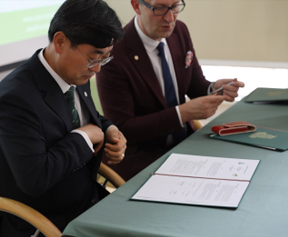
Membership in GBIF is voluntary and formalized through the signing of an agreement that defines the principles of cooperation, including a commitment to supporting open access to biodiversity data. Member countries and participating institutions contribute to achieving the goals of the Convention on Biological Diversity (CBD), among others by sharing data and developing monitoring systems.
The GBIF community continues to grow, bringing together experts and institutions dedicated to advancing open data and international collaboration.
Poland in GBIF
Poland is a full member of the Global Biodiversity Information Facility (GBIF) and holds voting rights in decisions shaping the future direction of the initiative. The national GBIF node is hosted by Uniwersytet Warszawski (University of Warsaw), where a team of specialists coordinates activities and supports institutions in publishing biodiversity data.
Data Sources and Data Quality
The establishment of the Global Biodiversity Information Facility (GBIF) was based on recommendations from the Biodiversity Informatics Subgroup of the Organisation for Economic Co-operation and Development. These recommendations emphasized the need for a global mechanism to ensure broad access to biodiversity data, highlighting the potential scientific and societal benefits of such an initiative.
A key aspect of GBIF’s operation is its strong focus on data quality. Only datasets provided directly by recognized scientific institutions and competent organizations are published. Data publishers primarily include universities, research institutes, government agencies, and scientific journals. Individual researchers typically publish their data through these institutions or via national GBIF nodes.
Data Standardization and Integration
Global Biodiversity Information Facility (GBIF) provides tools, standards, and best practices that enable institutions worldwide to efficiently share biodiversity data. These data include information on species occurrences across time and space, originating from a wide range of sources—from historical museum collections to modern genetic data and field observations.
Citizen science initiatives also play an important role. Platforms such as iNaturalist allow users to record and share biodiversity observations using mobile devices, significantly expanding the volume and geographic coverage of available data.
Data integration within GBIF relies on shared standards, particularly Darwin Core, which underpins the structure of most datasets in the system. This standardization makes it possible to combine hundreds of millions of records from diverse sources into a single, coherent data resource.
Data Access and Use
All data shared through Global Biodiversity Information Facility (GBIF) are published under one of the Creative Commons licenses, ensuring open access and broad reusability. These data can be used in scientific research, environmental monitoring, natural resource management, conservation planning, and many other applications requiring biodiversity information.
Each dataset is assigned a unique DOI (Digital Object Identifier), which enables persistent citation and reliable access to the original data source.
Darwin Core Standards
Darwin Core is an international standard for describing biodiversity data. It enables consistent recording of information about species and their occurrences, allowing datasets from different sources to be easily integrated, analyzed, and shared on a global scale.
Why is Darwin Core important?
In initiatives such as Global Biodiversity Information Facility (GBIF), data consistency is essential. Darwin Core provides a common “language” that enables institutions worldwide to publish data in a comparable and interoperable way.
This makes it possible to:
- integrate data from different databases and countries,
- conduct large-scale analyses (e.g. changes in species distributions),
- use data effectively in scientific research and biodiversity conservation.
What kind of data does it cover?
Darwin Core allows for the standardized description of, among others:
- scientific names of organisms,
- geographic location (e.g. coordinates),
- date of observation or specimen collection,
- data source (e.g. museum collection, field observation),
- information about the observer or institution.
The standard is flexible and can be adapted to different types of data—from historical museum specimens to modern field observations and molecular data.
Publishing data using Darwin Core
Datasets formatted according to Darwin Core are typically published through GBIF tools such as IPT (Integrated Publishing Toolkit). This ensures that:
- data are automatically validated,
- datasets receive a persistent identifier (DOI),
- data become accessible to users worldwide.
The use of Darwin Core is currently one of the fundamental requirements for publishing data in GBIF and ensures both high data quality and usability.
Legal Framework
Publishing data in Global Biodiversity Information Facility (GBIF) is based on legal regulations and international standards governing data sharing, reuse, and information protection.
European Union regulations
NSPIRE Directive:https://eur-lex.europa.eu/legal-content/PL/TXT/?uri=CELEX:32007L0002
Open Data Directive:https://eur-lex.europa.eu/legal-content/PL/TXT/?uri=CELEX:32019L1024
General Data Protection Regulation (GDPR): https://eur-lex.europa.eu/legal-content/PL/TXT/?uri=CELEX:32016R0679
National regulations (Poland)
Act on Open Data and Re-use of Public Sector Information:https://isap.sejm.gov.pl/isap.nsf/DocDetails.xsp?id=WDU20210001641
Copyright Law:: https://isap.sejm.gov.pl/isap.nsf/DocDetails.xsp?id=WDU19940240083
International regulations:
Convention on Biological Diversity (CBD):https://www.cbd.int/convention/text/
Nagoya Protocol: https://www.cbd.int/abs/doc/protocol/nagoya-protocol-en.pdf
GBIF standards and guidelines:
https://www.gbif.org/publishing-data
https://www.gbif.org/data-quality-requirements
Licensing:
Polish GBIF Node – About the Project
What is the Polish GBIF Node?
The Polish Node of the Global Biodiversity Information Facility (GBIF) is the national component of the global biodiversity data infrastructure. Its main objective is to support institutions in Poland in publishing, sharing, and effectively using biodiversity data.
The activities of the Polish GBIF Node are funded under the project “Polish Node of the Global Biodiversity Information Facility”, implemented on the basis of Agreement No. 2023/WK/09 within the programme “Support for the participation of Polish research teams in international research infrastructure projects”. The project is carried out in accordance with the provisions of the agreement and its subsequent amendments.
The agreement was concluded with the Ministry of Education and Science, whose responsibilities are currently carried out by the Ministry of Science and Higher Education. This funding supports the development of the national biodiversity data infrastructure and enables Poland’s active participation in the global GBIF network.
Project leader
The Polish GBIF Node is led by Uniwersytet Warszawski (University of Warsaw) (Project Investigator: Dr Piotr Tykarski), which is responsible for coordinating activities at the national level.
The node team supports institutions in:
- preparing data for publication,
- applying standards (e.g. Darwin Core),
- using GBIF tools,
- building capacity in data management.
Main objectives:
- zwiększenie dostępności danych o bioróżnorodności z Polski,
- wspieranie otwartego dostępu do danych naukowych,
- rozwój współpracy między instytucjami,
- wspieranie badań naukowych i działań na rzecz ochrony przyrody,
- dostarczanie danych do raportowania w ramach międzynarodowych zobowiązań, takich jak Convention on Biological Diversity.
Project partners
The project involves a wide range of scientific institutions and universities, including:
- W. Szafer Institute of Botany, Polish Academy of Sciences
- Institute of Dendrology, Polish Academy of Sciences
- Institute of Oceanology, Polish Academy of Sciences
- Institute of Systematics and Evolution of Animals, Polish Academy of Sciences
- Upper Silesian Museum in Bytom
- Adam Mickiewicz University in Poznań
- University of Gdańsk
- Jagiellonian University
- University of Łódź
- Maria Curie-Skłodowska University
- University of Agriculture in Kraków
- University of Silesia in Katowice
- University of Wrocław
These institutions act as data publishers and share their datasets through the GBIF infrastructure.
Why is it important?
Through the activities of the Polish GBIF Node, data on Poland’s biodiversity become part of a global knowledge base. This enables:
- better understanding and monitoring of biodiversity,
- evidence-based decision-making,
- Poland’s participation in international scientific and environmental initiatives.
Institute of Dendrology, Polish Academy of Sciences in GBIF
The Institute of Dendrology, Polish Academy of Sciences is one of the leading research institutions in Poland specializing in the study of trees and shrubs, including their biology, ecology, and genetic diversity. The Institute actively contributes to the sharing of biodiversity data through the Global Biodiversity Information Facility (GBIF), supporting the development of open scientific data resources.
Role of the Institute in GBIF
The Institute of Dendrology PAS acts as a data publisher, which means that it:
- provides validated scientific data on species occurrences,
- publishes datasets in accordance with international standards (e.g. Darwin Core),
- ensures high quality and reliability of shared information.
As a result, the Institute’s data are globally accessible and can be used in scientific research, environmental analyses, and biodiversity conservation activities.
The coordinator of the Institute’s activities within the Polish Node of the Global Biodiversity Information Facility is PhD Habill. Dominik Tomaszewski, Professor ID PAS.
The role of Data Manager and the main contact point for researchers wishing to publish data in GBIF is held by PhD Karolina Sobierajska, who supports the preparation and publication of datasets in accordance with applicable standards.
GBIF profile
Datasets published by the Institute can be accessed directly via the GBIF portal:
https://www.gbif.org/publisher/f7259790-9300-11da-8596-b8a03c50a862
The publisher profile provides information about the institution and a full list of all published datasets.
The Institute publishes, among others, data on:
- occurrences of tree and shrub species,
- dendrological collections,
- field observations and scientific research data.
Examples of datasets available in GBIF:
- Institute of Dendrology PAS Woody Plant Occurrence Dataset (Poland)
https://www.gbif.org/dataset/f7c496b0-9300-11da-8596-b8a03c50a862 - Juniperus occurrences from research collections of the Institute of Dendrology, Polish Academy of Sciences
https://www.gbif.org/dataset/ef062cb4-8ff4-46c4-b926-f5e4063973ab - Acer L. specimens held in the KOR Herbarium of the Institute of Dendrology, Polish Academy of Sciences
https://www.gbif.org/dataset/7e5516b0-9bfc-45a9-9d94-5b66212a3baa
Each dataset includes:
- detailed metadata,
- information on sources and methodology,
- a unique DOI enabling proper citation.
By publishing data through GBIF, the Institute:
- supports global biodiversity research,
- increases the visibility of Polish scientific data,
- enables their use in environmental and climate change analyses.
Open data publishing contributes to scientific progress and improves our understanding of processes occurring in the natural environment.
Data Manager – Institute of Dendrology PAS
If you are a researcher at the Instytut Dendrologii Polskiej Akademii Nauk and would like to publish biodiversity data from your research in the Global Biodiversity Information Facility (GBIF), please contact the Data Manager:
Contact person:
Karolina Sobierajska
e-mail:
ext. 136
mobile: +48 575 770 669
Other Data Managers at the Institute: Dominik Tomaszewski, Magdalena Terlecka
Support includes assistance with data preparation for publication, alignment with standards (e.g. Darwin Core), and guidance through the GBIF publishing process.